
THE GUARDED HARVEST PROJECT
Aflatoxin
Clean Grain, Clear Future
Aflatoxin: What It Is, What Causes It, and How Solar Dryers Help
What Is Aflatoxin?
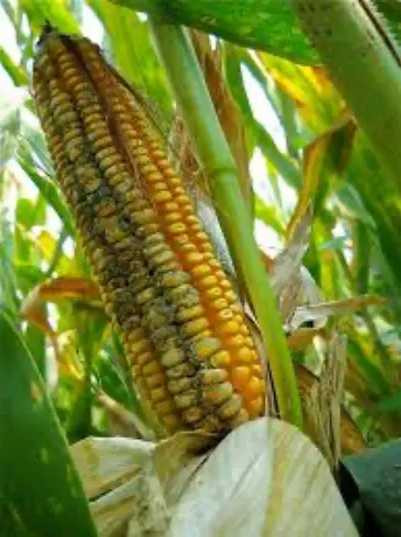
Aflatoxins are toxic compounds produced by molds, primarily Aspergillus flavus and Aspergillus parasiticus, that thrive in warm, humid environments. These toxins are most commonly found in staple crops, such as maize, peanuts, and tree nuts. Aflatoxin B1, the most potent variant, is classified as a Group 1 carcinogen by the World Health Organization (WHO, 2018).
What Causes Aflatoxin Contamination?
Contamination occurs both before and after harvest:
- Pre-harvest, when crops are stressed by drought, insect damage, or poor soil conditions.
- Post-harvest, when grains are improperly dried or stored with moisture levels above 13.5%, creating ideal conditions for fungal growth (Khlangwiset et al., 2011).
The fungi responsible for aflatoxins require oxygen, warmth, and moisture, conditions often present when grains are dried slowly or stored in open-air environments.
Why Is Maize Especially Vulnerable?
Maize is particularly susceptible due to:
- Its high carbohydrate content, which supports fungal metabolism.
- Common drying practices that expose kernels to ambient humidity and soil-borne spores.
- Limited infrastructure in smallholder systems, where post-harvest handling is often informal and unregulated (Hell & Mutegi, 2011).
Health Impacts of Aflatoxin
Chronic exposure to aflatoxins can lead to:
- Liver cancer
- Immune suppression
- Stunted growth in children
- Acute liver failure in high-dose cases (Liu & Wu, 2010)
These risks are especially severe in regions where maize is a dietary staple and food safety systems are under-resourced.
How Solar Dryers Help
Solar dryers, like those that are being deployed by The Guarded Harvest Project, offer a scalable solution:
- Accelerated drying: Reduces moisture to safe levels (<13.5%) in 6 to 8 hours, compared to 5+ days with open-air methods.
- Off-ground containment: Prevents contact with soil, pests, and airborne fungal spores.
- Controlled airflow and temperature: Inhibits fungal growth during the critical post-harvest window (Abass et al., 2014).
A recent study found that maize dried using modern fabricated solar dryers had significantly lower aflatoxin levels compared to traditional methods, with many samples falling below WHO’s recommended safety thresholds (Mmongoyo et al., 2017).
References:
Abass, A. B., Ndunguru, G., Mamiro, P., Alenkhe, B., Mlingi, N., & Bekunda, M. (2014). Post-harvest food losses in a maize-based farming system of semi-arid savannah area of Tanzania. Journal of Stored Products Research, 57, 49–57. https://doi.org/10.1016/j.jspr.2014.01.001
Hell, K., & Mutegi, C. (2011). Aflatoxin control and prevention strategies in maize for sub-Saharan Africa. African Journal of Microbiology Research, 5(5), 459–466.
Khlangwiset, P., Shephard, G. S., & Wu, F. (2011). Aflatoxins and growth impairment: A review. Critical Reviews in Toxicology, 41(9), 740–755. https://doi.org/10.3109/10408444.2011.575766
Liu, Y., & Wu, F. (2010). Global burden of aflatoxin-induced hepatocellular carcinoma: A risk assessment. Environmental Health Perspectives, 118(6), 818–824. https://doi.org/10.1289/ehp.0901388
Mmongoyo, J. A., et al. (2017). Effectiveness of solar drying in reducing aflatoxin contamination in maize: A case study in Tanzania. Food Control, 76, 109–117. https://doi.org/10.1016/j.foodcont.2017.01.013
World Health Organization. (2018). Aflatoxins. Retrieved from https://www.who.int/news-room/fact-sheets/detail/mycotoxins
Image Source: Mississippi State University – Extension